Source flexible ptfe gasket for pumps, valves, and stationary seals
Compare 10 flexible ptfe gasket for pumps, valves, and stationary seals with varying sizes, temperatures, and customization options. Buyers can review specifications like PTFE material, corrosion resistance, and manufacturing standards to find suitable solutions.
Key considerations
Products List




Comprehensive Sourcing Guide
Strategic Sourcing Guide for Flexible PTFE Gaskets for Pumps
Understanding the Technical Profile of PTFE Gaskets
When sourcing flexible PTFE gaskets specifically designed for pump applications, buyers must first establish a clear understanding of the material's inherent properties and how they translate into functional performance. Polytetrafluoroethylene (PTFE) is widely recognized for its exceptional chemical resistance and thermal stability, making it a preferred choice for sealing systems that encounter aggressive fluids or extreme temperatures. The core keyword "flexible ptfe gasket for pumps" implies a product that must maintain integrity under dynamic conditions, such as the vibration and pressure fluctuations typical in pump operations.
Based on available product data, the material composition is explicitly identified as PTFE. This material offers a temperature operating range that spans from -180 to 260 degrees Celsius, covering a vast spectrum of industrial processes. This wide thermal window ensures that the gasket remains flexible and effective in cryogenic environments as well as high-temperature steam or hot oil applications. The flexibility of the gasket is critical for pumps, as it allows the seal to conform to minor surface irregularities on flanges, compensating for misalignment or gasket compression without losing sealing capability.
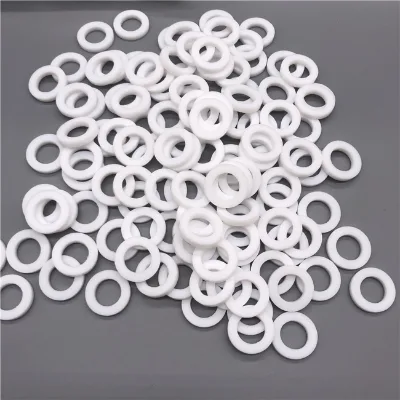
The physical form of these gaskets varies to suit specific pump configurations. Observed product attributes indicate that the gaskets can be manufactured as Ring Gaskets or Flat Gaskets. The shape is often described as O-Ring or Round, though "Others" are available to meet unique design requirements. For pump flanges, the thickness is a significant variable, with specifications ranging from 1mm to 100mm. This range allows procurement teams to select a thickness that balances the need for compression set resistance with the available space in the flange groove. Additionally, the gaskets may feature ribs, with options available for both ribbed and non-ribbed designs, which can enhance sealing performance in specific pressure scenarios.
Compliance, Certification, and Manufacturing Standards
In the industrial procurement of sealing components, verifying compliance with international standards is not merely a formality but a critical risk mitigation strategy. Buyers must ensure that the supplied PTFE gaskets adhere to recognized manufacturing standards to guarantee dimensional accuracy and material consistency. The available data confirms that manufacturers often align their production with ASME, BS, JIS, and EN (DIN) standards. These standards provide a framework for ensuring that the gaskets meet the rigorous demands of pressure-containing equipment.
Furthermore, the concept of "Standard" versus "Nonstandard" is prevalent in this sector. While many gaskets are produced to standard dimensions, the flexibility of PTFE allows for custom manufacturing to meet "Customer Needs" regarding size and shape. The standard diameter range observed spans from 5mm to 3000mm, covering everything from small instrumentation pumps to massive industrial centrifugal pumps. For specific pump applications, nominal pipe sizes (DN) ranging from DN10 to DN2000 are also common specifications. Buyers should verify that the supplier can produce gaskets that match the exact DN or custom diameter requirements of their pump flanges.
Certification plays a pivotal role in validating the quality management systems of the supplier. High-confidence facts indicate that suppliers in this category often hold ISO, SGS, and TUV certifications. These certifications suggest that the manufacturing process is subject to third-party audits and quality control protocols. While specific ISO 9001:2015 status is noted in background contexts, the explicit presence of ISO, SGS, and TUV in the product attributes serves as a strong indicator of a supplier's commitment to quality assurance. Buyers should request current copies of these certificates to ensure they are valid and cover the specific manufacturing facilities producing the gaskets.
Cost Drivers and Procurement Variables
The pricing and procurement structure for flexible PTFE gaskets are influenced by several distinct variables. Unlike commodity items with fixed pricing, the cost of these gaskets is highly dependent on customization, material grade, and order volume. The observed listed price range in the market spans from 0.01 to 100 USD, a wide disparity that reflects the difference between standard off-the-shelf items and highly customized, large-diameter, or thick-section gaskets.
A primary cost driver is the level of customization required. The product attributes confirm that customization is available, and the "prod_standard" and "prod_model" fields often list "Customer Needs" rather than fixed catalog numbers. Custom orders typically incur higher unit costs due to the setup time and specialized tooling required. Additionally, the Minimum Order Quantity (MOQ) varies significantly, with observed ranges from 1 to 100 units. For buyers requiring large quantities for plant-wide maintenance, negotiating a lower unit price based on volume is essential. Conversely, for one-off replacements, the MOQ of 1 allows for immediate procurement without the burden of excess inventory.
Packaging also impacts the final landed cost. The data shows a variety of packaging options, including Wooden Box Packaging, Carton Packaging, and Wooden Cartons. The choice of packaging depends on the size and fragility of the gasket, as well as the shipping distance. For international shipments from China, robust packaging like wooden boxes is often necessary to prevent damage, which adds to the overall cost. Buyers should factor in these packaging requirements when calculating the total cost of ownership, especially for large-diameter gaskets that require specialized handling.
Typical Applications and Performance Characteristics
The application of flexible PTFE gaskets extends beyond simple static sealing; they are engineered to perform in demanding environments. The primary application identified is for pumps, where the gasket must withstand the cyclic loading and vibration inherent in rotating machinery. However, the data also lists "Valve" as a key application, indicating that these gaskets are versatile components used across various fluid handling systems.
Performance attributes highlight the gasket's resistance to corrosion, a critical factor when handling acidic, alkaline, or solvent-based fluids. PTFE is chemically inert, making it suitable for a broad range of aggressive chemicals that would degrade other sealing materials. The temperature range of -180 to 260 degrees Celsius ensures that the gasket maintains its mechanical properties across extreme thermal cycles. This is particularly important for pumps that handle hot fluids or cryogenic liquids, where thermal expansion and contraction can compromise the seal.
The "Stationary Seal" type designation suggests that these gaskets are primarily designed for static flange connections rather than dynamic shaft seals. In pump applications, this means they are used between the pump casing and the pipe flange, or between the pump head and the base. The ability to be manufactured with ribs or without ribs allows for optimization based on the specific pressure rating of the pump. Ribbed gaskets can provide better sealing under lower bolt loads, while flat gaskets may be preferred for high-pressure applications where uniform compression is required.
Supplier Evaluation and Verification Protocols
Selecting the right supplier is a decisive factor in the success of a procurement project. The available data indicates that suppliers in this sector often have a significant track record, with one attribute noting a "30 Year" history. While this is an observation of a specific listing, it highlights the importance of evaluating supplier longevity and experience. A supplier with decades of experience is more likely to have refined their manufacturing processes and quality control measures.
Buyers should verify the supplier's capability to handle both OEM (Original Equipment Manufacturer) and ODM (Original Design Manufacturer) requests. The "Yes" attribute for OEM or ODM suggests that suppliers are flexible enough to produce gaskets to a buyer's specific drawings or to develop custom solutions. This flexibility is crucial for specialized pump applications where standard gaskets may not fit.
When evaluating a supplier, buyers must look beyond the marketing claims and verify the actual production capabilities. Key verification steps include:
- Confirming the validity of ISO, SGS, and TUV certificates.
- Requesting samples to test the material flexibility and dimensional accuracy.
- Verifying the manufacturing location, which is listed as China, to understand logistics and lead time implications.
- Assessing the packaging methods to ensure they meet the buyer's shipping requirements.
It is also important to note that while "Standard" and "Nonstandard" options are available, the buyer must clearly define their requirements to avoid ambiguity. The "prod_model" field shows various identifiers like "SX-00508" and "FY-XJ0211," which may correspond to specific product lines or custom orders. Buyers should ensure that the supplier uses a clear identification system to track orders and maintain quality consistency.
Quality Control and Long-Term Procurement Strategy
Implementing a robust quality control (QC) strategy is essential for maintaining the reliability of pump systems. Given the critical nature of sealing in fluid handling, any failure can lead to leaks, environmental hazards, and costly downtime. The presence of certifications like ISO and TUV suggests that suppliers have established QC protocols, but buyers should not rely solely on these external validations.
Buyers should implement a multi-stage QC process that includes:
- Incoming Inspection: Verify that the received gaskets match the specified dimensions, thickness, and color (often white).
- Material Verification: Ensure the material is indeed PTFE and meets the specified temperature and corrosion resistance requirements.
- Dimensional Checks: Use calipers or micrometers to confirm that the diameter and thickness fall within the acceptable tolerance ranges.
- Visual Inspection: Check for surface defects, such as cracks, voids, or contamination, which could compromise the seal.
For long-term procurement, establishing a strategic partnership with a reliable supplier is more beneficial than transactional buying. The ability to customize gaskets to "Customer Needs" allows for a continuous improvement process where the supplier can refine the design based on field performance. Buyers should also consider the lead time and production capacity of the supplier, especially for non-standard orders. The "prod_packing" options, ranging from wooden boxes to cartons, should be standardized to ensure consistency in storage and handling.
In conclusion, sourcing flexible PTFE gaskets for pumps requires a balanced approach that considers technical specifications, compliance, cost, and supplier reliability. By leveraging the available data on material properties, standards, and customization options, buyers can make informed decisions that ensure the long-term performance and safety of their pumping systems. The wide range of available options, from standard sizes to custom designs, provides the flexibility needed to meet diverse industrial requirements while maintaining high quality and reliability.
FAQs
What is the temperature range for flexible PTFE gaskets?
The temperature range spans from -180 to 260 degrees Celsius. This wide thermal window ensures the gasket remains effective in both cryogenic environments and high-temperature steam applications for pumps.
Which certifications do suppliers typically hold for these gaskets?
Suppliers typically hold ISO, SGS, and TUV certifications. These credentials indicate that the manufacturing process undergoes third-party audits and adheres to strict quality control protocols for industrial sealing components.
Can I order custom sizes for specific pump flanges?
Yes, customization is available to meet specific customer needs. Manufacturers can produce gaskets with diameters ranging from 5mm to 3000mm and thicknesses from 1mm to 100mm to fit unique flange designs.
What materials are used to manufacture these gaskets?
The primary material used is PTFE, known for its chemical inertness. This material provides excellent corrosion resistance, making it suitable for aggressive fluids handled by industrial pumps and valves.
How are these gaskets packaged for international shipping?
Packaging options include wooden boxes, cartons, and wooden cartons. The choice depends on the gasket size and fragility, ensuring protection during transport from the manufacturing location in China.
What is the minimum order quantity for these gaskets?
The minimum order quantity ranges from 1 to 100 units. This flexibility allows buyers to procure single replacement parts or larger volumes for plant-wide maintenance without excessive inventory burdens.
Are these gaskets suitable for valve applications as well?
Yes, these gaskets are suitable for both pumps and valves. They function as stationary seals designed to maintain integrity under the pressure fluctuations and vibration typical of fluid handling systems.
Which manufacturing standards do these gaskets comply with?
They comply with ASME, BS, JIS, and EN (DIN) standards. These standards ensure dimensional accuracy and material consistency required for pressure-containing equipment in various industrial sectors.